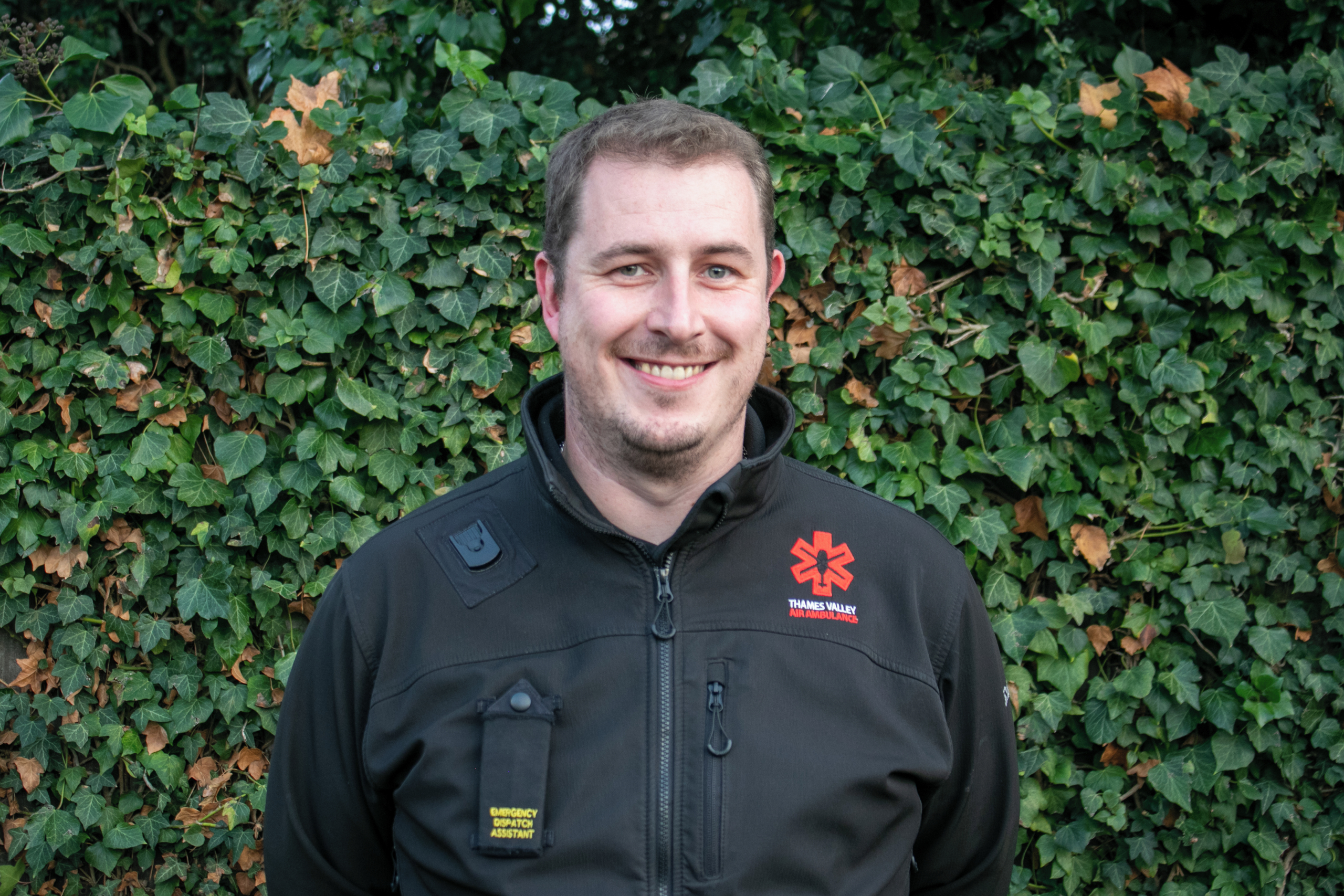
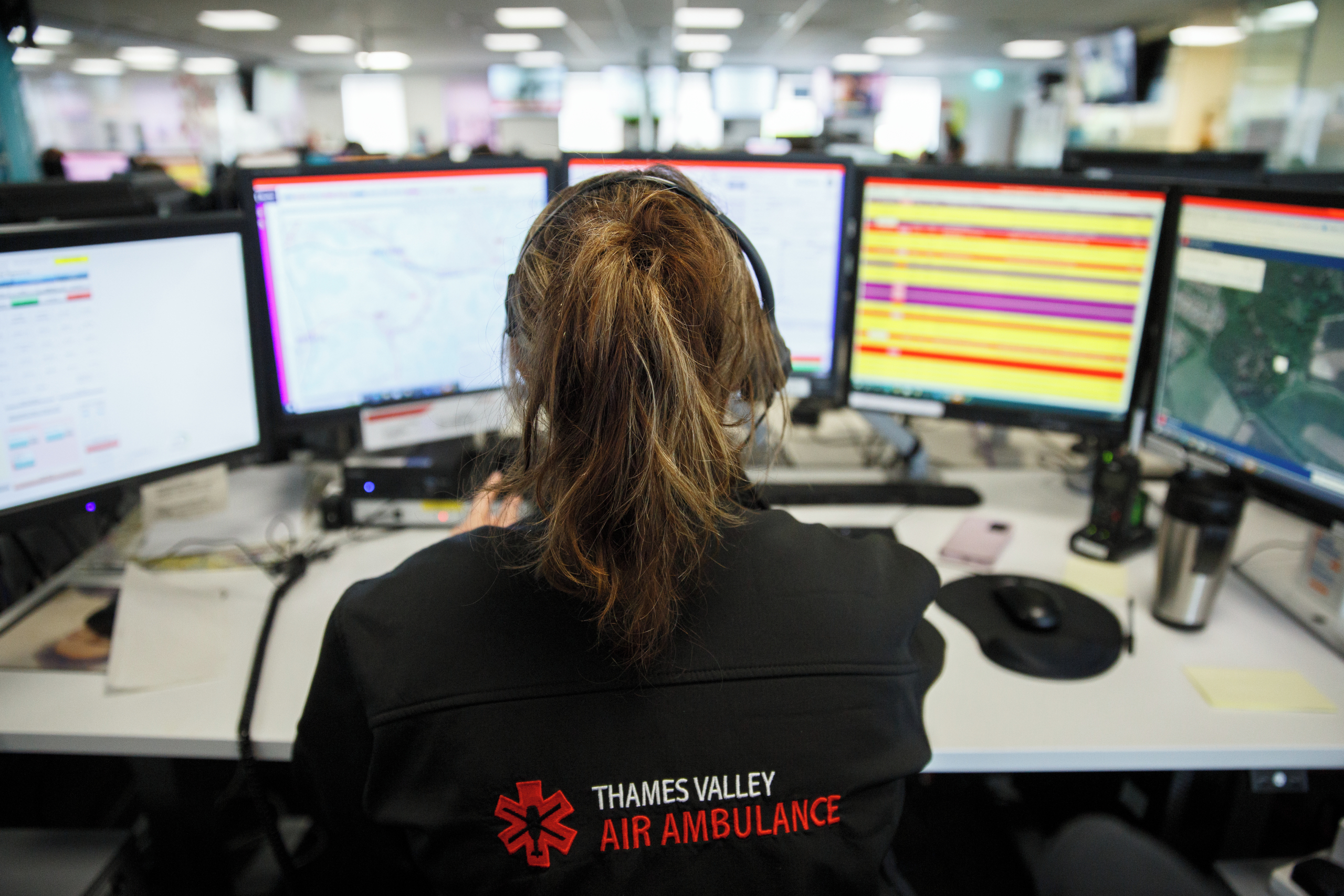
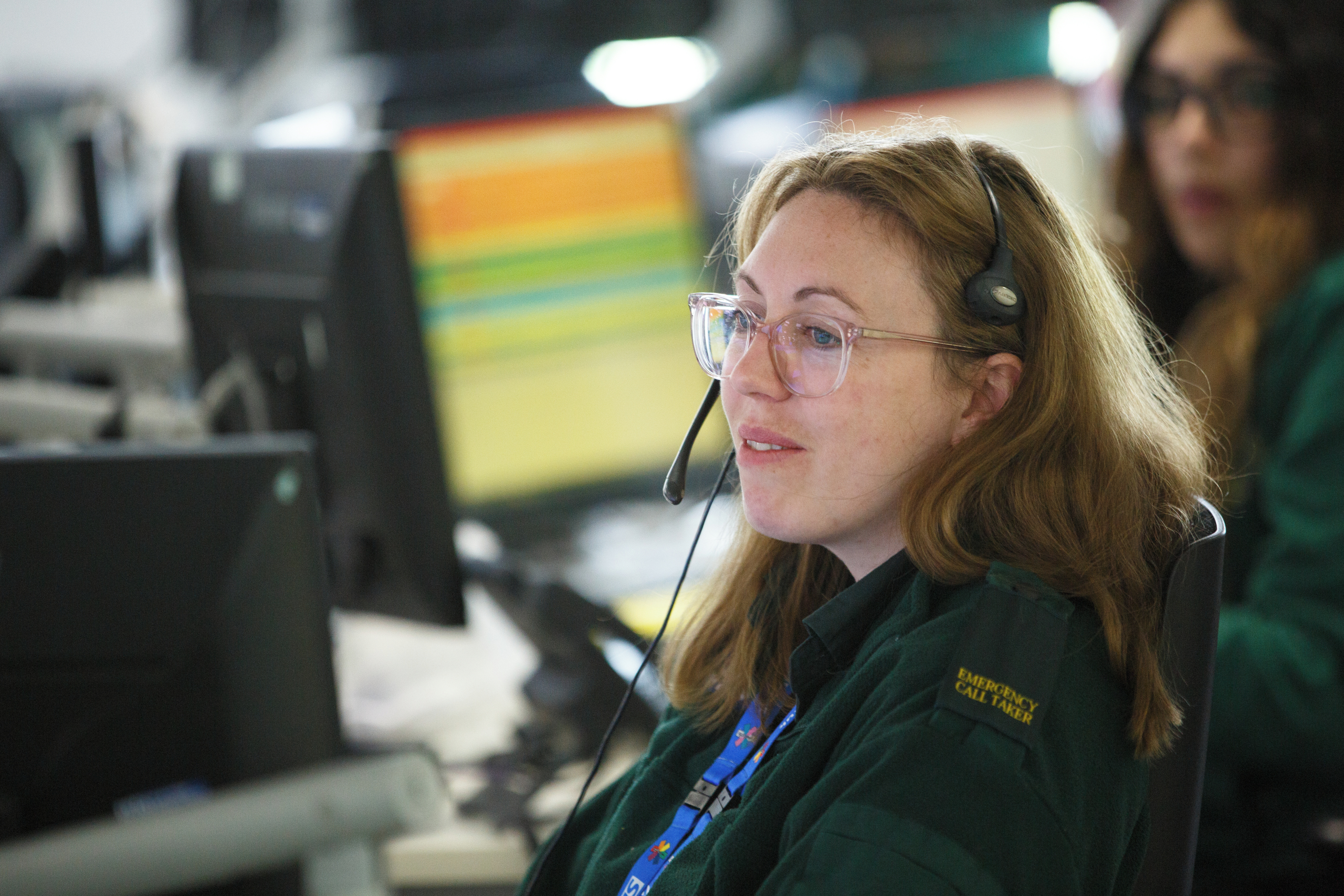
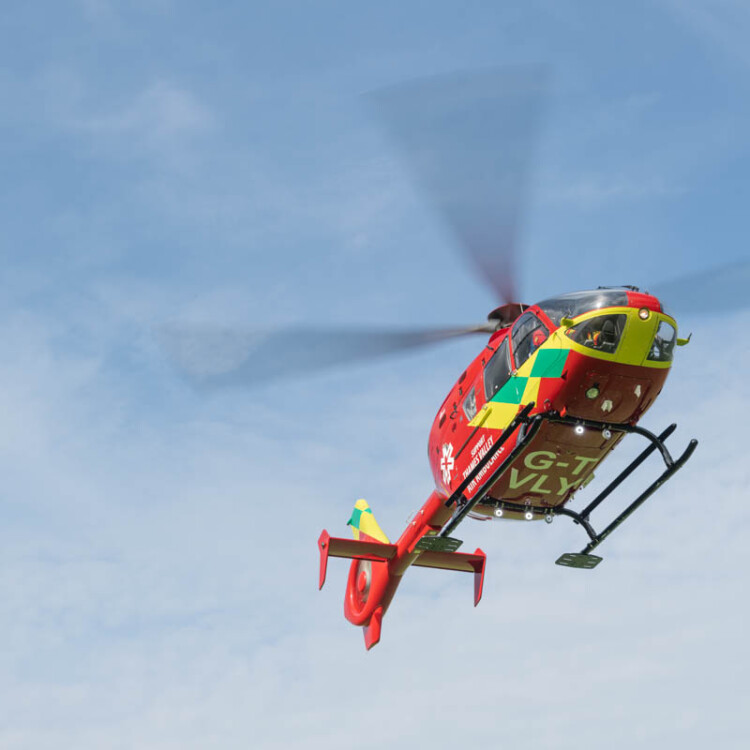
Have you ever wondered what happens when you call 999? Most people see the flashing lights of emergency vehicles out on the road, but few know the people who coordinate the response when an emergency happens. We caught up with Dispatch Assistant Ed to find out more about what life is like on the HEMS desk.
“When I call 999, do you answer?”
It’s one of the most common questions I’m asked in my role. The answer is no. But I do listen. When someone calls 999, our colleagues at South Central Ambulance Service (SCAS) are the first to answer. They speak to the caller to find out what’s happened and arrange the right help. But with so many 999 calls being made every day, Thames Valley Air Ambulance can’t attend every incident. We attend the most serious emergencies in the region, where bringing advanced critical care can be the difference between life and death. That’s where I come in. My job is to work alongside a critical care paramedic (CCP) to decide where our resources will be most beneficial.
If we think one of our crews could make a difference, then I’ll look at which of our assets is best placed to respond. This isn’t simply a case of sending the helicopter. We have to consider the nature of the incident, where it’s happened, which crews are available, and most importantly, who can get there quickest. Depending on the situation, I can then dispatch either our helicopter or one of our Critical Care Response Vehicles (CCRVs).
Ultimately the final decision on when to send out a resource, or when to stand down crew is made by a critical care paramedic. However, I can still send a resource to an emergency if it meets a certain criteria – known as Tier One.
Another question I hear often is “will the helicopter be sent if I’m in a remote area?”. Again, not necessarily. Our focus is on sending the most appropriate resource, whether that’s the helicopter or one of our CCRVs. If the helicopter is sent, I’ll send the pilot an exact grid reference of the incident location, as accuracy is crucial. We also make use of What3Words to provide an additional point of reference. It’s all about getting crew to patients as quickly as possible.
other questions I find myself being asked are:
There’s no single qualification that gets you into dispatch, but there are definitely skills that help. A big part of the role is processing lots of information quickly and making sound decisions under pressure, so strong communication skills and an ability to stay calm under pressure are valuable traits. Emergency dispatchers also need to learn how to use the radio and the computer-aided dispatch system, learn the phonetic alphabet, as well as all policies and procedures. It’s an extensive training process and there are always new skills to learn.
No. Ultimately this is down to the pilot. Our pilots will consider several factors when choosing a landing spot including the size of the area, any potential hazards like livestock or powerlines and how close the landing leaves them to the patient. As a dispatch assistant, we can look at satellite images of the area surrounding the incident to anticipate where the helicopter could land. This means that we can communicate with our SCAS colleagues at the scene and arrange a pickup for our crew to get to the patient if the landing spot is far from the patient.
I won’t pretend it’s always easy. In a hectic control room, there are often lots of things going on simultaneously. I can be monitoring hundreds of calls per day, so communication and teamwork are really important. A challenge I find is that no two days are the same. There’s also lots of work we do that goes unseen by the public. I might be coordinating multiple resources across several different incidents at the same time, setting up Rendezvous Points for crew to meet SCAS, and seeking support from neighbouring air ambulances or other emergency services. I’ll also potentially be informing airports or restricted air space locations of our attendance. Overall, it’s a lot of coordination, but that makes it so rewarding when it all comes together.
I think a lot of people who work shifts will say it’s difficult to manage a work life balance. I’ve been working shifts for a long time, so I’m pretty used to it, but even I find myself losing track of the days sometimes! The worst thing for me, is after coming off late shifts and getting my body clock back to mornings can be very difficult. Having a few days off is great but when it comes back to the early mornings it can take a while to readjust. It varies from dispatcher to dispatcher, but I think most people will agree that’s a challenge.
Personally, if I’ve had a difficult shift, I’ll speak to the critical care paramedic on the desk. They’ve got a huge amount of experience and are always happy to offer help or support. I can also speak to my manager in a more private environment to open up on anything that is bothering me. What I appreciate is that people genuinely look out for each other. There have been times my manager has contacted me after my shift just to check how I’m doing and if I need any more support.
I think every dispatch assistant would answer that differently. For me personally, any incidents involving children stay with me more than some others. If an incident happens close to where I live, it’s hard not to let my mind wander that it may be someone I know. Those are the incidents I find most mentally challenging.