
Patient
For most patients, being treated by our critical care paramedic and doctor crews is a one-off event. A cardiac arrest or a road traffic collision. An incident that happens out of the blue and turns their life upside down.
But for Sarah, mum to eleven-year-old Edith, emergencies are part of everyday existence.
When Edith was just three years old, she was diagnosed with Alexander Disease, a rare degenerative illness for which there is no cure. As Sarah describes it, “The illness started to take different parts of my daughter. It started with her needing to use a feeding tube. Then she developed respiratory issues. She would just stop breathing.”
Sarah and her husband Jeff were given training by the hospital in what most parents would find unthinkable: resuscitating their child. They began to carry emergency equipment wherever they went, including a bag valve mask, oxygen, and a suction machine. They learned to perform a jaw thrust procedure on Edith to open her airway.
At one point, Edith would stop breathing around three times a week. Sarah explains: “We never knew when it might happen, so we were always on edge. We couldn’t predict when we would next need to resuscitate Edith. It got to the point where her younger sister knew to ring 999 and pass me the suction.”
Edith’s two sisters, Beatrice and Cora, have grown up knowing their older sister needs special care. They have seen their parents perform CPR on Edith and know that people from the emergency services need to come and help sometimes. On three of those occasions, a Thames Valley Air Ambulance crew answered the call.
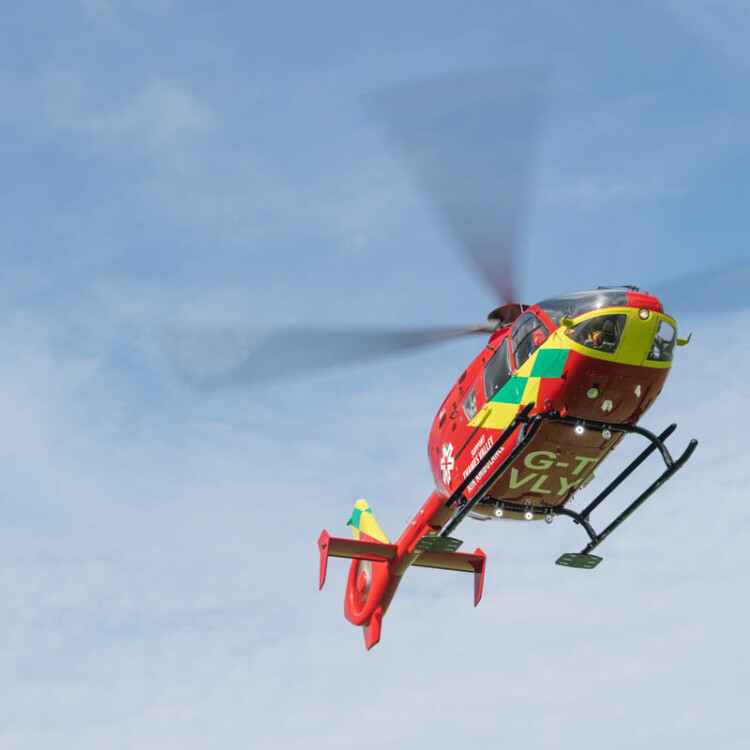
Twice, our crews have come to Edith’s side at the family’s home near Didcot. They have given her oxygen, inserted arterial lines to carefully monitor her, and accompanied her to hospital in an ambulance. The family home is close to fields, which means the helicopter can land safely, and crews can be with Edith quickly when every minute matters.
Sarah remembers: “When Thames Valley Air Ambulance arrived on scene, I suddenly felt very safe. It meant I could go back to being Edith’s mummy again and not a paramedic. I could hold her hand. They bring all the skills to make my daughter better, which brings such utter relief to me as a parent. Not only that, but they looked after me emotionally. They explained everything they did to Edith; they were gentle and caring.”
The family is not always at home when the worst happens. Edith’s illness means emergencies can happen at any time. Including during a family outing to a busy café in Didcot, when Edith stopped breathing.
“That’s when we met doctor Asher”, Sarah recalls, “As well as providing the care Edith so desperately needed that day, Asher took the time to listen to us as parents. He understood where we were coming from, not just as a doctor but as a dad himself. Edith has been in and out of hospital her whole life and we had only just been discharged. We told him we really didn’t want to go back. Asher heard us. He stabilised her and made all the arrangements for her to be cared for at home. That has always stuck with me. He’s a really special person.”
We make sure every day is filled with a little bit of love and we will never give up hope. We want to give her the very best life possible. She deserves it.
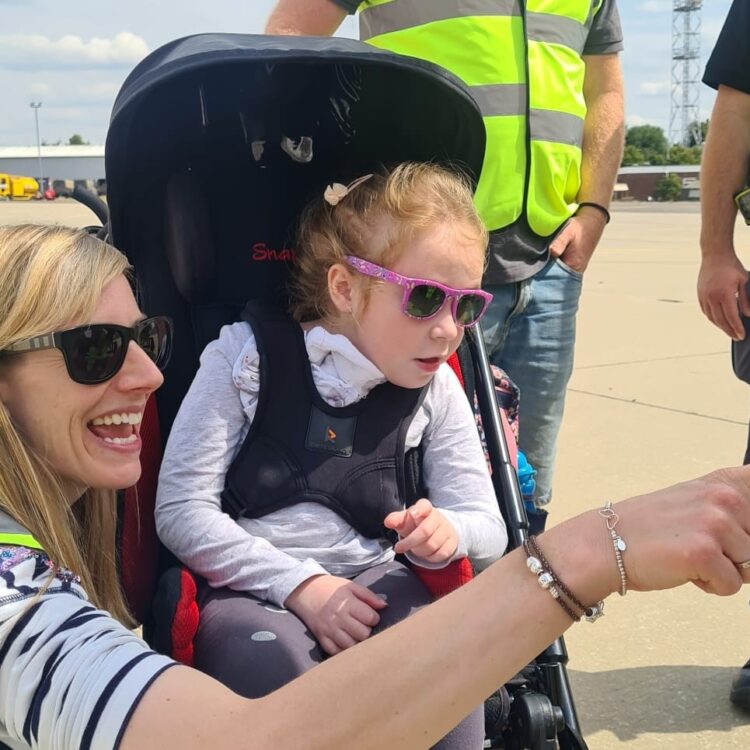
In 2021, Edith suffered a seizure which lasted more than four hours and took her movement away. She is now a wheelchair user. Thankfully, the episodes where Edith stops breathing appear to have reached a plateau, and the family has not had to resuscitate her for two years. But, as Sarah describes, they never take anything for granted. “Edith is stable at the moment. But you just never know what this disease might take from her next. One morning she might wake up and have no speech. That’s why we make the most of every single day with Edith.”
Edith turned 11 in February and is happy at her local school, with a nurse who accompanies her every day. It’s a happy place for her. She goes horse riding every week with Riding for the Disabled and she loves baking cakes, going out for hot chocolate, and watching pantomimes. As Sarah says, “Our motto is hope and love. We make sure every day is filled with a little bit of love and we will never give up hope. We want to give her the very best life possible. She deserves it.”
The family got to meet doctor Asher again at a reunion at RAF Benson, where Edith got to sit in the helicopter. They then attended an open day at our Stokenchurch HQ in 2025 and got to look around a critical care response vehicle. Sarah and Jeff both support Thames Valley Air Ambulance and continue to champion our lifesaving charity in their local community.
“The difference between our story and many others” Sarah reflects, “Is that, for us, needing the Thames Valley Air Ambulance crew isn’t a once in a lifetime event. It’s a very real prospect that’s never far from our minds. That’s why we’ll never stop supporting this fantastic charity, and we hope that anyone reading this will find it in their hearts to donate towards the lifesaving care that people like Edith rely so much upon.”
Andy Holland, Director of Engagement at Thames Valley Air Ambulance, said:
“Edith and her whole family are so inspiring, finding hope despite everything they’ve faced. That’s why we felt it was fitting to have Edith’s name soaring above our community, bringing lifesaving care to people who need it.
“We know so many people have been touched by our service in some way and we’re excited to offer the chance to put a name alongside Edith’s with this new campaign. Every name will tell a story. It’s a wonderful way to show your support for our charity, or to remember someone you hold in your heart.”
We hope that anyone reading this will find it in their hearts to donate towards the lifesaving care that people like Edith rely so much upon.
29/07/2026

News
20/04/2026
News
05/03/2026

News
13/02/2026

Corporate
12/01/2026
News
02/12/2025

Blog
Join the community by signing up and keep up to date with news and events.


